


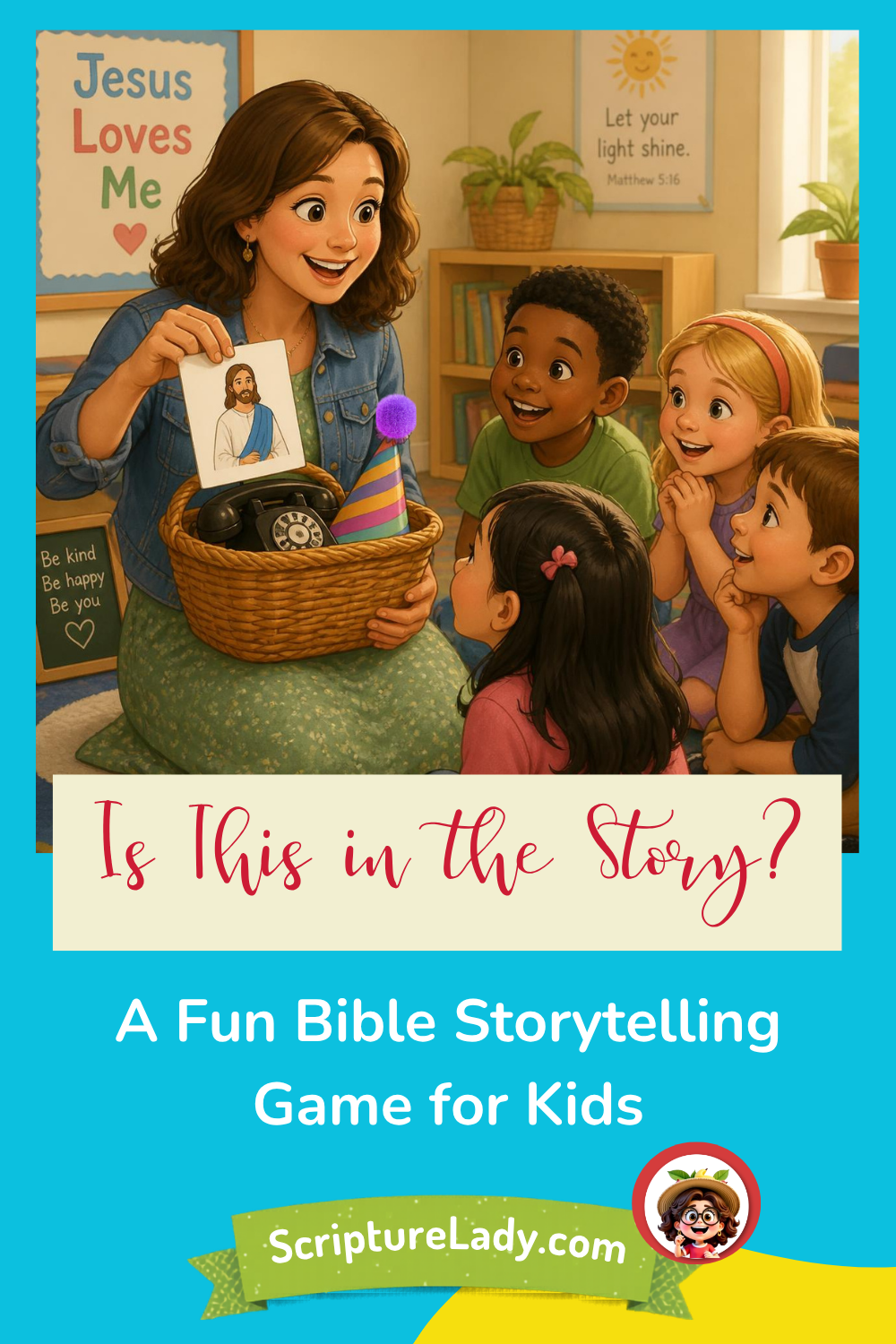
I love finding playful ways to help kids remember a Bible story after we’ve told it — and this simple game has been one of my favorites for years. All you need is a story, a bag of props, and a few silly decoys to keep kids on their toes!
This Bible storytelling game will help your kids remember the people, places, and events of any Bible story, and for this one you will need the following:
- A Bible story appropriate for ages 4–7 (told from a Bible, a story Bible, or a picture book)
- Small props, printed pictures, or paper cutouts — one for each character, place, and object in the story
- 3–6 “decoy” items that are clearly not in the story (a telephone, a hat, a cookie)
- A bag or basket to hold everything
How to play:
Read or tell your chosen Bible story first. Then gather your bag of story items and decoys and say: “We’re going to play ‘Is This in the Story?’ I’ll pull something out, and you tell me if it was in the story or not.”
Pull one item at a time from the bag so everyone can see it. For each item, ask two quick questions: “Was this in the story?” and then, “Who was this?” or “What happened with this?” These quick questions help kids practice naming characters and explaining the story in their own words.
Suggestions for Success:
- For groups, give each small group its own sheet of drawings or paper objects so every child can point to an answer.
- For one-on-one or family time, use this as a bedtime review of the story you just read together.
- After the game, invite kids to act out a short scene using a few of the props.
- Store each story’s props in a labeled bag or box so you can reuse them next time you teach it.
🎉 Want FREE Bible Games for Your Kids?
Grab 6 free Bible resources instantly — perfect for Sunday Schools, homeschools, and Christian Classrooms!
YES, PLEASE! →🔒 No spam, ever. Unsubscribe anytime.
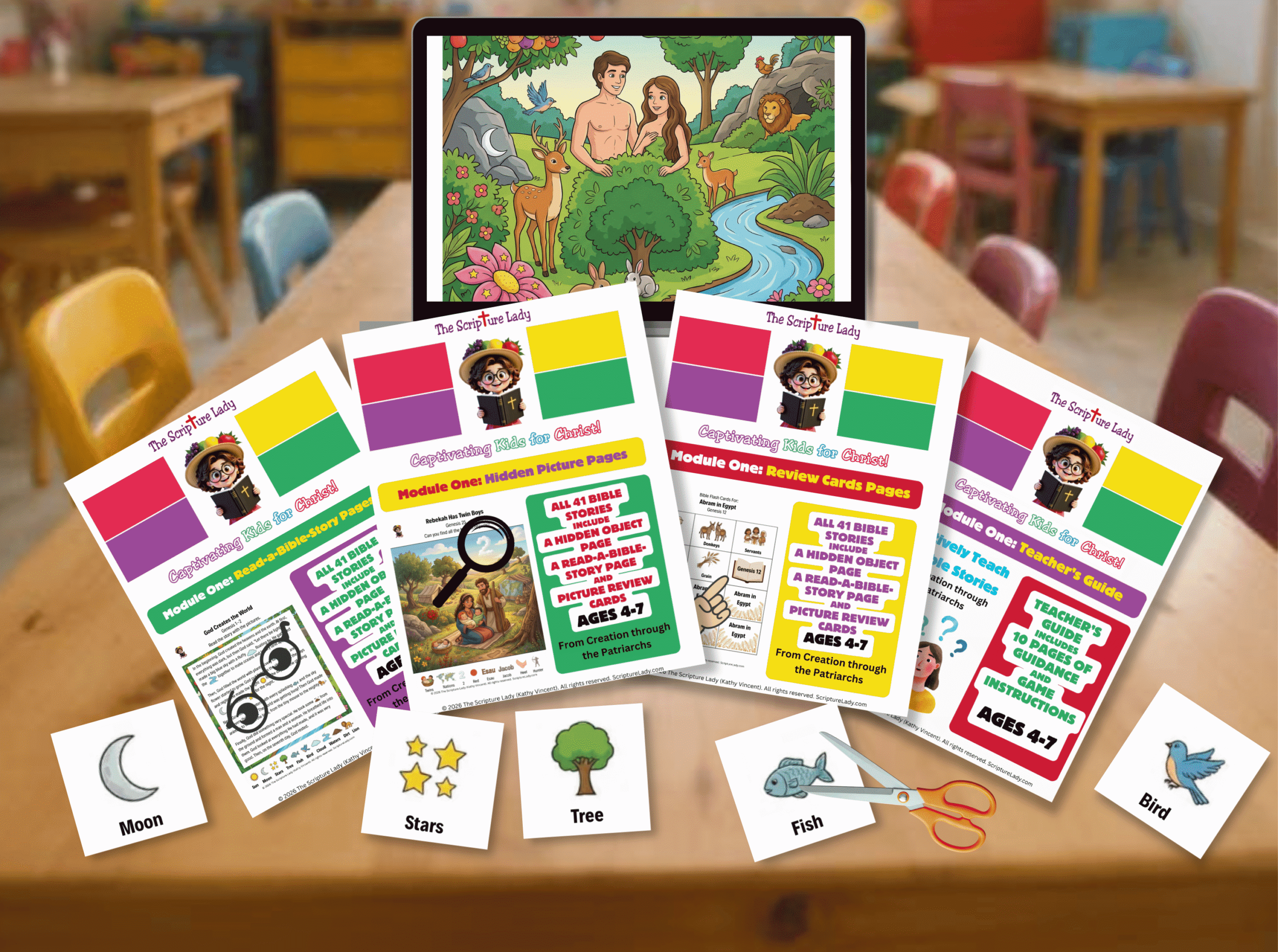
Want to Make Bible Time Truly Unforgettable?
Take your preschoolers deeper into God's Word with 41 Bible stories from Genesis — each one paired with a beautiful hidden objects page, a read-aloud story, and fun review games. Ages 4–7.
YES! SHOW ME HOW →Only $17 — instant digital download!



I love using props and visuals to tell God’s great Bible stories! This is one of my go-to ways to help kids remember what they’ve just heard — and they always giggle at the decoys.
I LOVE using props and visuals to tell God’s great Bible stories. Use this Bible storytelling idea to help your little ones learn a Bible story while having fun and maybe even giggle, too!